

I. Product Overview
Food, cosmetic and industrial formulations frequently suffer from microbial contamination caused by molds, yeasts and bacteria, which shorten shelf‑life and trigger product spoilage. With tightening global safety regulations, low‑irritation, thermally‑stable and regulatory‑compliant antimicrobial additives have become essential for modern manufacturing. Dehydroacetic Acid (DHA) is a versatile synthetic organic preservative with reliable broad‑spectrum bacteriostatic and fungistatic performance. It delivers effective inhibition against molds, yeasts and common spoilage bacteria, serving as a practical alternative to traditional benzoate and sorbate preservatives. It is widely adopted across food processing, personal‑care cosmetics, pharmaceutical preparations and multiple industrial anti‑mildew systems.

Many conventional preservatives lose satisfactory efficacy under neutral to‑weak‑alkaline conditions or elevated processing temperatures, weakening preservation performance. In contrast, DHA maintains favorable antimicrobial activity over a relatively wide pH range, retaining useful active fractions within environments where benzoic acid and sorbic acid perform poorly. The material appears as an odorless white crystalline powder, featuring good thermal stability and low hygroscopicity; it can withstand routine thermal processing steps without obvious decomposition. Though sparingly soluble in pure water, it dissolves readily in alkaline aqueous solutions, ethanol, acetone and other organic solvents. Its diluted working solutions remain stable without unwanted precipitation or phase separation under typical production and storage cycles.
II. Core Advantages: Reasons for Dehydroacetic Acid’s Strong Market Competitiveness
1. Enhanced Formulation Stability & Reduced Comprehensive Production Costs
Dehydroacetic Acid exhibits excellent compatibility with most common formulation raw materials, blending smoothly with emulsifiers, thickeners and other auxiliary additives without antagonistic reactions. It requires no special pre‑treatment before dosing and fits well with conventional mixing and automatic feeding workflows, simplifying production operations and lowering extra process investment.
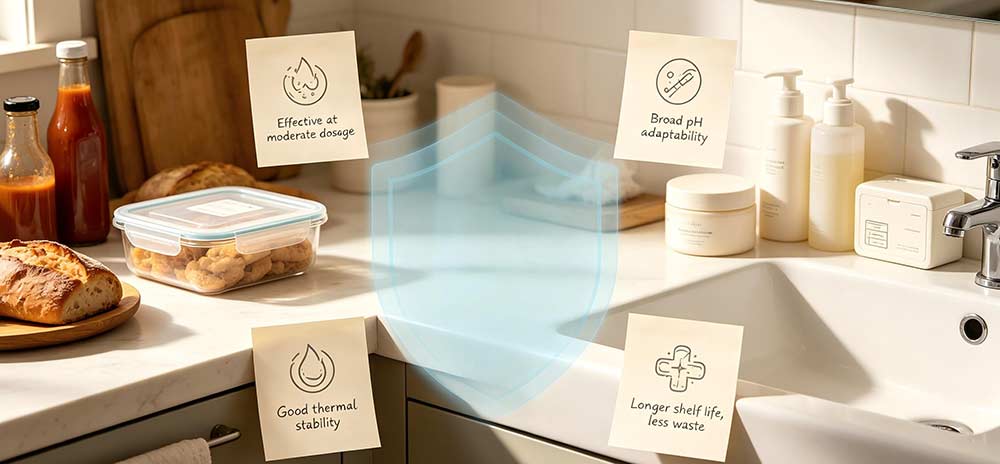
Compared with traditional preservatives, DHA achieves satisfactory anti‑microbial results at moderate dosage levels. Its robust pH‑adaptability reduces the need for frequent pH adjustment of finished formulations, cutting auxiliary reagent consumption. Its favorable thermal stability enables it to survive pasteurization and high‑temperature processing, helping avoid preservative failure during thermal treatment. Extended product shelf‑life effectively reduces finished‑goods rejection and waste during warehousing and logistics, lowering overall operational expenditure for manufacturers across food, cosmetic and industrial sectors.
2. Broad‑Spectrum Antimicrobial Performance & Reliable Long‑Term Protection
Dehydroacetic Acid inhibits microbial reproduction by interfering with intracellular enzyme activity, offering effective suppression against molds, yeasts and multiple spoilage bacteria that lead to product deterioration. It shows notable inhibitory effects against mold species, while imposing limited impact on beneficial lactic‑acid bacteria for specific fermented systems. Where benzoates and sorbates experience noticeable efficacy drop‑off under near‑neutral conditions, Dehydroacetic Acid still maintains stable preservation capacity, making it highly valuable for neutral and weakly‑alkaline finished products.
For finished goods stored under normal or high‑humidity conditions, DHA helps prevent surface mildew, gas production and turbidity triggered by microbial proliferation. It stabilizes product appearance, odor and texture throughout shelf‑life, minimizing quality complaints and batch losses caused by microbial spoilage. For cosmetics and topical preparations, appropriately dosed DHA brings low skin‑irritation risk, safeguarding end‑user experience while providing consistent anti‑contamination protection.
3. Safety Profile & Compliance with Global Regulatory Standards
DHA is classified as low‑toxic with non‑carcinogenic properties, complying with major international food‑additive and cosmetic‑ingredient specifications. It releases no pungent volatile substances during production and application, creating safer operating conditions for on‑site workers. Corresponding COA, MSDS and supporting qualification documents are available to facilitate overseas shipment and customer regulatory audits. For cosmetic applications, relevant global regulatory guidance defines applicable usage limits for finished personal‑care products.
III. Core Application Scenarios of Dehydroacetic Acid
Benefiting from balanced broad‑spectrum antimicrobial activity, thermal stability and formulation compatibility, Dehydroacetic Acid acts as a critical additive for diversified end‑use industries:
1.Food & Beverage Preservation (Key Application)
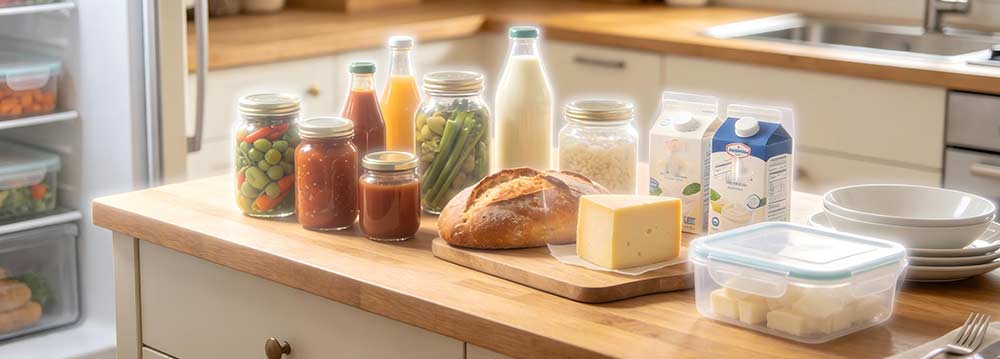
Applied in pickled vegetables, sauces, baked goods, processed dairy and fermented food systems (in accordance with local regulatory requirements). It helps inhibit mold and yeast propagation, supporting extended shelf‑life for processed food and reducing spoilage losses throughout cold‑chain and ambient storage.
2. Cosmetics & Personal‑Care Products
Suitable for creams, lotions, shampoos, sunscreens and leave‑on / rinse‑off skincare formulations. It helps prevent microbial contamination of water‑containing cosmetic matrices, and is widely used in mild‑formula and sensitive‑skin‑oriented personal‑care lines.
3. Pharmaceutical & Topical Preparations
Used as preservative component for topical ointments, lotions and external pharmaceutical formulations, protecting preparations from microbial spoilage during shelf‑life.
4. Industrial Anti‑Mildew for Coatings, Adhesives & Polymer Materials
Functions as mildew‑resistant additive for water‑borne coatings, adhesives, latex and PVC polymer products. It helps resist mildew growth in high‑humidity storage and service environments, protecting industrial material performance and surface appearance.
5. Textile, Leather & Auxiliary Industrial Systems
Deployed for mildew prevention for textiles and leather goods; also serves as intermediate for synthesis of veterinary chemicals and fine‑chemical derivatives.

Ⅳ. Global Supply Pattern
Unilong chemical manufacturers provide mature DHA production routes, stable quality‑control systems and flexible scalable capacity. Supported by complete raw‑material supply chains and competitive product indicators, DHA grades are exported to major global regions, satisfying growing global demand for high‑performance preservative raw materials.
Ⅴ. Conclusion
Dehydroacetic acid combines broad‑spectrum antimicrobial efficacy, wide pH adaptability, thermal stability and cost‑effective usability, matching current global trends for safe, high‑efficiency preservation solutions. As a practical alternative to conventional preservatives, it helps manufacturers secure finished‑product quality and optimize production and inventory management. With updated safety requirements across food, cosmetic and industrial sectors, DHA will keep demonstrating solid application value in diversified formulation scenarios.
Post time: Sep-30-2026