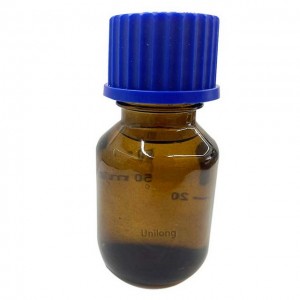

Ethyl Nicotinate CAS 614-18-6


Product Details
| Item | Details |
|---|---|
| Product name | Ethyl Nicotinate |
| CAS number | 614-18-6 |
| EC number | 210-370-7 |
| Molecular formula | C8H9NO2 |
| Molecular weight | 151.16 g/mol |
| Chemical synonyms | Nicotinic acid ethyl ester; ethyl pyridine-3-carboxylate |
| Cosmetic ingredient name | ETHYL NICOTINATE |
Ethyl Nicotinate for Fine Chemical Production
Ethyl nicotinate is a feedstock for nicotinoyl intermediates and reduced nitrogen heterocycles. Its documented synthesis applications include nicotinohydrazide, hydrazone derivatives, pyridyl oxadiazoles and hydrogenated pyridine carboxylates. These routes make it relevant to producers manufacturing downstream intermediates with a defined pyridine-3-carboxylate starting structure.
The liquid ester supports two main synthetic directions: conversion of the ester group to downstream nicotinoyl derivatives, and reduction of the pyridine ring to partially or fully saturated intermediates. Commercial formulation enquiries also cover skin-conditioning and perfuming applications. For these projects, Unilong supplies the raw material against its chemical specification and coordinates the available information for the intended use.
Technical Specifications
| Test item | Reference specification |
|---|---|
| Appearance | Colorless to light yellow transparent liquid |
| Content | ≥99% |
| Water | ≤0.2% |
Specification basis: Unilong reference COA. The applicable supply batch has its own COA.
The content and moisture limits provide a defined starting point for synthesis feed and ingredient blending. Water is limited to 0.2% in the reference specification, independently of the content requirement. This is relevant to production mixtures with a controlled water balance, including reactions and solvent blends where moisture enters with the raw material.
The available Unilong reference COA identifies batch JL20250728, analysed on 28 July 2025. It records content of 99.80% and water of 0.10%, together with a conforming appearance result. The same record covers 3,000 kg packed in 200 kg drums and gives an expiry date of 27 July 2027. These figures describe that reference batch; the content and water limits in the table remain the stated acceptance criteria.
Physical Properties and Handling
General reference properties include a boiling range of 223–224°C, melting range of 8–10°C, density of approximately 1.107 g/mL at 25°C, and refractive index n20/D of approximately 1.504. A closed-cup flash point of approximately 93°C is also reported in supplier technical data. These are reference properties, separate from the Unilong specification limits.
Ethyl nicotinate is liquid at 20°C. Its melting range is close enough to cool-weather temperatures that colder transport or storage may affect its physical state and ease of transfer. Handling after cold exposure follows the supplied material's instructions. The material is also described as air- and light-sensitive in supplier technical information, supporting closed-container handling and protection from unnecessary exposure.
Applications
Nicotinoyl and Hydrazide Intermediates
Ethyl nicotinate is a starting material for nicotinohydrazide, or pyridine-3-carbohydrazide. This conversion preserves the pyridine-3-carbonyl portion needed in subsequent nicotinoyl chemistry. Further documented routes use the hydrazide to prepare hydrazones and then 2-(3-pyridyl)-5-aryl-1,3,4-oxadiazoles. The ester therefore provides an entry point to several related intermediate families through a defined sequence of downstream transformations.
Hydrogenated Heterocyclic Intermediates
Catalytic ring hydrogenation provides another use for ethyl nicotinate. Partial reduction can produce ethyl 1,4,5,6-tetrahydropyridine-3-carboxylate, while full reduction gives access to the corresponding saturated piperidine carboxylate framework. Both routes have been demonstrated in continuous-flow process research using a trickle-bed reactor. This supports its role as a feedstock for manufacturing reduced nitrogen heterocycles.
Catalyst choice and process conditions control selectivity between the reduced products. The ester group remains available for later conversion in these ring-reduction routes, providing further options for downstream intermediate production.
Skin-Conditioning Cosmetic Formulations
ETHYL NICOTINATE is listed with a skin-conditioning function in cosmetic ingredient references. It can be considered for formulated personal care products where this ingredient function is required, including development work on creams, lotions and gels. Its liquid form allows incorporation through the selected formulation carrier, with the appropriate concentration and use conditions determined for the finished product.
The raw-material specification provides content, moisture and appearance information for ingredient evaluation. Compatibility and stability depend on the complete formulation. Skin-contact applications require an appropriate finished-product safety assessment, particularly because the concentrated raw material has handling hazards that differ from those of a finished cosmetic formulation.
Fragrance and Perfuming Compositions
Ethyl nicotinate also has a documented fragrance function. Its role in a perfuming composition is determined by the chosen blend and the product base into which that blend is incorporated. It is relevant to formulation projects seeking this specific ingredient, with aromatic contribution assessed at the intended concentration. The same raw-material identity may therefore support a perfuming application as well as a separate skin-conditioning application.
Specialist Insect-Monitoring Lure Development
Ethyl nicotinate has been investigated as a volatile attractant for Thrips obscuratus in stone-fruit orchards. Field studies in New Zealand reported attraction in peach and apricot crops. This evidence makes it a candidate ingredient for specialist lure-development projects targeting that species. The relevant end product is a baited monitoring system whose performance depends on the target insect and release arrangement.
Trap response differs by species and setting. In a separate greenhouse trial, ethyl nicotinate did not increase capture of western flower thrips. The application therefore depends on a defined target species and trapping system. This raw-material specification carries no registered-pesticide or finished-lure claim.
Packaging, Storage and Commercial Supply
Unilong's reference supply record documents 200 kg drum packing for ethyl nicotinate. Current pack sizes, MOQ and lead time are confirmed with the quotation. The documented liquid format is relevant to drum-based receipt and transfer at a production site. Agreed shipping marks and packing records can accompany the commercial supply arrangement.
Keep the material in tightly closed containers in a cool, dry, well-ventilated area, protected from light and ignition sources. Container handling should minimise spills, vapour exposure and contact with skin or eyes. The applicable SDS provides the material-specific protective measures and transport information. Storage temperature and shelf life follow the applicable product documentation.
Why Choose Unilong
Product and Batch Documents
We coordinate material specifications, available TDS and SDS, and the COA for the applicable supply batch. Documentation relates to the selected material and grade.
Factory Visits and Audit Coordination
We help coordinate supplier questionnaires, manufacturing-site visits and buyer-appointed third-party audits. Access, scope and timing are arranged with the relevant manufacturer.
Pre-Shipment Inspection and Sample Approval
Third-party inspection can be arranged with the supplying site. Where a commercial order includes pre-shipment sample approval, dispatch follows the agreed buyer approval arrangements.
Packaging and Export Support
We coordinate agreed shipping marks, commercial invoices, packing lists and transport documents. Packing or loading photographs can form part of the arranged shipment record.
Frequently Asked Questions
Can I request a sample before a commercial order?
Yes. Sample quantity, packaging and availability are arranged for the selected ethyl nicotinate supply.
Can I obtain the COA for the supply batch?
We coordinate the available COA for the applicable batch. The reference COA identifies its own batch and analysis date.
Can additional analytical requirements be discussed?
Yes. Specific tests or limits can be submitted for technical review. Acceptance depends on the material and the supplying team's capabilities.
Is pharmacopoeial or food-grade compliance included?
This specification makes no pharmacopoeial or food-grade claim. Projects requiring such a grade need separate product-specific documentation.
Ordering from Unilong
For an ethyl nicotinate quotation, send the required specification, application, estimated quantity and destination country. Include any packaging, document or delivery-date requirements in the same enquiry.