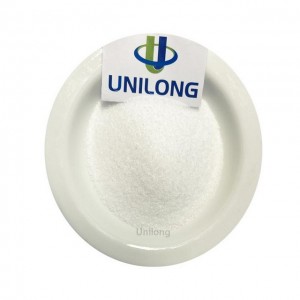

2-Iminothiolane Hydrochloride CAS 4781-83-3


Product Overview
Traut’s reagent is a cyclic thioimidate that reacts with primary amino groups to form an amidine-containing substituent with a terminal thiol. The thiol is available for attachment to a second component through suitable sulfhydryl chemistry. This functionalization route uses amino groups already present on the substrate, including lysine side chains and suitable peptide amino termini. Proteins, peptides and amine-bearing polymers are established substrates for this type of modification.
The amidine-containing linkage retains charge properties similar to those of the original amino group. The modification also introduces a compact five-atom spacer, commonly described as approximately 8.1 Å long. These characteristics support conjugate designs that need a short connection between the substrate and a newly introduced coupling site. Charge retention describes the linkage chemistry; the behavior of the complete modified protein still depends on its structure and the extent of modification.
Chemical Characteristics
2-Iminothiolane hydrochloride is commonly described as a white to off-white crystalline powder or solid. It dissolves in water, allowing thiolation to be carried out in aqueous systems compatible with soluble biomolecules. The modification step therefore does not inherently require a large organic-solvent fraction. Protein solubility and buffer composition remain important features of the reaction system, particularly for substrates whose solution behavior changes with pH or chemical modification.
The reaction introduces an unprotected thiol, so a separate thiol-deprotection step is unnecessary before subsequent coupling. This supports conjugation routes using thiol-reactive labels and functionalized macromolecules. The degree of thiolation changes with the reagent-to-substrate ratio and the number of accessible amino groups. For proteins carrying several lysine residues, modification can produce more than one attachment site. Higher modification levels can also affect protein function, making the required thiol loading specific to the conjugate design.
Applications
Protein and Peptide Conjugation
2-Iminothiolane hydrochloride introduces coupling sites into proteins and peptides for preparation of disulfide- or thioether-linked conjugates. Documented examples include glycoprotein–antibody conjugates and streptavidin–antibody conjugates. A thiolated component can be paired with a second molecule carrying compatible reactive groups. The reaction accesses primary amines on the original biomolecule, expanding the available attachment sites for conjugation.
PEGylation and Maleimide Coupling
Thiol groups introduced by Traut’s reagent can react with maleimide-functional PEG to prepare PEG–biomolecule conjugates. The reagent supplies the thiol-bearing connection at the original amine site, while the PEG partner supplies the polymer chain. This approach can functionalize a protein for PEG attachment through available amines without using disulfide reduction as the thiol-generation step. PEG chain length and terminal functionality are selected through the separate PEG reagent. The chemistry is used in conjugate development involving proteins and other compatible biomolecules.
Particle and Surface Functionalization
2-Iminothiolane supports attachment of modified biomolecules to compatible particles and surfaces through newly introduced thiols. Established applications include sulfhydryl–maleimide coupling involving colloidal particles and preparation of avidin-containing protein nanoparticles. Accessible amines provide sites for initial thiolation, while the particle or surface carries the complementary functionality. This use is relevant to assembly of functional particle conjugates containing proteins or other amine-bearing components.
Thiolated Chitosan
Reaction of 2-iminothiolane with amino groups on chitosan produces thiol-bearing chitosan–butylamidine derivatives. The attached thiols can participate in disulfide formation, providing a route to covalent network formation within the modified polymer. Studies of these derivatives describe gel formation and viscosity changes associated with thiol functionalization. This application uses the reagent as a modifier during preparation of functional chitosan materials. Thiol content and oxidation state are properties of the resulting derivative, with gel behavior depending on the polymer and its preparation conditions.
Polysaccharide–Protein Conjugates
2-Iminothiolane can also introduce sulfhydryl groups into polysaccharides through reaction with hydroxyl groups. This chemistry has been used to prepare polysaccharide–protein conjugates and materials for affinity-related applications. Hydroxyl modification proceeds under different conditions from primary-amine thiolation and reacts more slowly. The distinction matters for carbohydrate substrates containing both amino and hydroxyl groups, because the available functional groups influence which reaction predominates. This route extends the reagent’s documented use beyond amine-bearing polymers to selected hydroxyl-rich polysaccharides.
Reaction Compatibility
Primary-amine thiolation with Traut’s reagent is commonly conducted at pH 7–9. Phosphate and borate buffers are established options for compatible protein systems, while competing primary amines can consume reagent. The reaction medium therefore affects both available reagent and substrate solubility. Hydroxyl-group modification becomes more relevant at higher pH, so the conditions used for polysaccharide activation differ from those used to target amino groups in proteins.
The initial thiol-bearing adduct is an intermediate for further conjugation. Its free thiol can be lost through oxidation or time-dependent recyclization, so it is normally used promptly in the next coupling stage. The substrate and reaction conditions affect intermediate stability. Unreacted low-molecular-weight reagent can be separated from modified proteins by appropriate purification, including desalting, before coupling. These features affect the available thiol content carried into the final conjugation reaction.
Storage, Packaging and Commercial Supply
The dry chemical is sensitive to moisture and unnecessary heat exposure. It is commonly kept under dry, cooled conditions, with the storage temperature specified for the supplied grade. Working solutions are generally prepared fresh because solution stability is limited by time-dependent chemical changes. Protection of the dry solid and management of solution hold time address different stages of handling the material.
Unilong coordinates pack size, protective packaging and transport arrangements for the selected supply. MOQ, sample quantity, any applicable sample charges and delivery time are confirmed in the current quotation. Product-specific storage and shipping requirements accompany the proposed supply arrangements.
Why Choose Unilong
Product and Batch Documents
We coordinate the available specification, TDS, SDS and applicable batch COA for CAS 4781-83-3. Product-specific document requests are handled with the supplying team within the available scope.
Factory Visits and Audit Coordination
We help arrange supplier questionnaires, manufacturing-site visits and buyer-appointed third-party audits. Access, scope and timing are agreed with the relevant manufacturer and the buyer.
Pre-Shipment Inspection and Sample Approval
Third-party inspection can be coordinated by arrangement. For orders requiring agreed pre-shipment sample approval, cargo is held pending the buyer’s approval.
Packaging and Export Support
We coordinate shipping marks, export packing and shipment documents with the supplying and logistics parties. Agreed packing or loading photographs can form part of the shipment records.
Procurement FAQ
Can I request a sample before commercial purchasing?
Yes. Samples can be arranged for material evaluation, with quantity, packaging and availability established for the selected supply.
Can Unilong match a specified analytical requirement?
We can check the available specification against requested purity, water limits and test methods. Acceptance depends on the material and supporting documents available.
Are alternative pack sizes available?
Pack-size requests can be reviewed with the supplying team. Available options depend on the material’s protective packaging and handling requirements.
Ordering from Unilong
For a quotation, send the required specification, estimated quantity, application and destination country. Include any packaging, document or delivery requirements with the same enquiry.